The Martin B-26 Marauder was the twin-engine medium bomber flown by the 320th Bombardment Group and the 444th Bomb Squadron. This expanded page explains the aircraft, acquisition story, training reputation, bomb-run method, and combat setting behind Bob Cary's mission records.
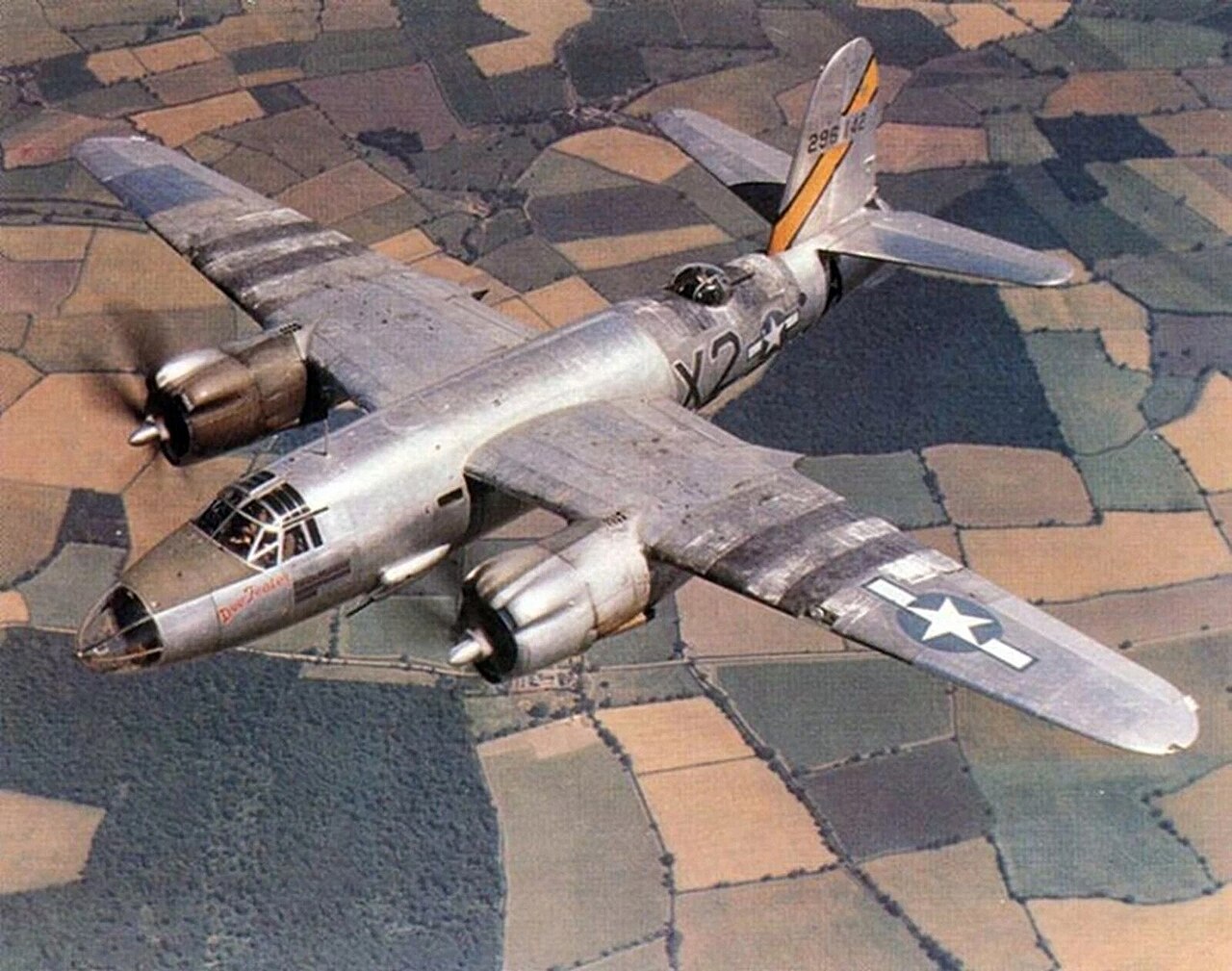
Representative U.S. Army Air Forces B-26B Marauder. This is not documented as Bob Cary's aircraft. Image: Wikimedia Commons / U.S. Air Force public domain source.Research caution
Bob Cary's unit flew B-26 Marauders, and his mission entries list aircraft or ship numbers. Those ship numbers do not automatically prove a serial number, aircraft name, or nose art. The Lady Bugs lead and the Christmas Day ship 82 question still need aircraft-level proof.
Transcript context
This page now uses a user-provided B-26 documentary transcript as a secondary context source for the aircraft's development, training, and combat reputation. It is not used as proof of Bob Cary's individual aircraft, missions, or personal memories.
Why This Aircraft Matters Here
The B-26 is the physical setting for much of Bob Cary's wartime record: the cockpit he appears in as co-pilot, then pilot; the formation aircraft sent against bridges, rail yards, ammunition sites, defenses, and airfields; and the airplane family remembered in the Lady Bugs story.
The 320th Bombardment Group was a medium bomber group trained on the B-26. It began combat in the Mediterranean in 1943, then moved through North Africa, Sardinia, Corsica, southern France, Dijon, Dole/Tavaux, and finally Germany. By the winter of 1944-1945, when Cary appears in the inspected mission records, the group was using B-26s for the practical work of isolating the battlefield: cutting rail lines, attacking bridges, hitting ammunition dumps, and supporting ground offensives.
The B-26 also helps explain the kind of airman Bob had to become. It was not a gentle training aircraft scaled up into combat service. It was a fast medium bomber whose early mishap record forced the Army Air Forces to mature the whole operating system around it: engineering changes, better training, maintenance discipline, checklists, formation tactics, and a more realistic understanding of what the aircraft was built to do.
Short History
1939-1940
Fast Medium Bomber
The B-26 came from a 1939 Army Air Corps requirement for a fast twin-engine medium bomber. Martin's design promised speed, range, tricycle landing gear, and a useful bomb load. The transcript describes a wartime acquisition pattern: urgency was so high that the aircraft went from drawing board to production without a prototype-test phase.
1941-1942
Requirements Growth
Extra armor, torpedo racks, and a top turret made sense in wartime, but they also added weight. The aircraft kept its speed promise, but the handling margin narrowed. That is why the B-26 is useful as an acquisition story, not just an aircraft story.
Training crisis
Difficult Reputation
The Marauder was powerful and clean, but it demanded discipline. Early models had high wing loading and relatively high takeoff and landing speeds. In training, that produced a harsh reputation and several grim nicknames. Better training, operating procedures, and later refinements made the aircraft far more effective in experienced hands.
320th context
Bob Cary's World
The 320th used the B-26 across the Mediterranean and European campaigns. Its late-war missions from Dijon and Dole/Tavaux match the pattern in Cary's records: rail bridges, marshalling yards, ammunition dumps, fortified positions, coastal defenses, and airfields.
Operational learning
Medium-Altitude Work
Early low-level use was costly, but the aircraft proved better suited to medium-altitude formation bombing. The transcript frames roughly 10,000 to 12,000 feet as the band where the Marauder's speed, bomb load, formation defense, and accuracy made sense together.
Legacy
Combat Workhorse
By late war, the B-26 had moved far beyond its early reputation. Crews valued its speed, toughness, and ability to come home damaged. The aircraft's record became strongest after the training, maintenance, and tactics caught up with the design.
Acquisition Case Study
The B-26's early story reads like a compact acquisition case study. The need was urgent, the design was ambitious, production moved fast, and operational users paid for the missing learning time. The aircraft was not simply good or bad. It was a high-performance system introduced before its full support structure was mature.
Urgent need
Speed To Production
The Air Corps wanted a fast medium bomber that could be produced immediately. That urgency helped the B-26 get into service quickly, but it also compressed design validation and operational test learning.
Concurrency
No Prototype Cushion
The transcript's most important acquisition lesson is the no-prototype fielding path. The program learned in production, training, and early operations what a slower test path might have exposed earlier.
Configuration growth
Weight Added Risk
Armor, turrets, and additional mission equipment were rational combat changes, but they changed handling and safety margins. The aircraft's reputation cannot be separated from that weight growth.
Sustainment
Field Support Lagged
Hydraulic, fuel, tire, nose-gear, propeller, and supply issues show that the support system was still catching up. A weapon system is more than the airframe delivered to the ramp.
Oversight
Truman Committee Pressure
The accident record became severe enough to draw congressional scrutiny. Oversight forced the program to prove that the aircraft could be made safe and useful, not merely promising.
Recovery
Systemic Fixes
Doolittle-led confidence building, better training, mechanic preparation, more power, and wing refinements helped turn the B-26 from a feared trainer into a respected combat aircraft.
The B-26 Marauder was an all-metal, twin-engine, medium bomber built by the Glenn L. Martin Company. Its tricycle landing gear, streamlined fuselage, shoulder-mounted wings, and two Pratt & Whitney R-2800 radial engines gave it a faster, more modern profile than many earlier bombers. That speed helped crews survive, but it also meant pilots had to respect approach speeds, engine handling, weight, and formation discipline.
A combat Marauder carried pilot and co-pilot in the cockpit, a bombardier in the glazed nose, and additional crew positions for navigation, radio, and defensive guns. Its defensive armament grew through the war; late examples carried heavy .50-caliber machine-gun coverage in nose, dorsal, waist, and tail positions, plus internal bomb bays capable of carrying a medium bomber load.
Training, Handling, and Trust
Takeoff Was A Gate
B-26 pilots learned that getting the aircraft safely airborne was not routine trivia. Engine behavior, propeller control, acceleration, runway remaining, and attitude all mattered. The transcript's crew recollections repeatedly treat takeoff as a psychological threshold.
Landing Required Discipline
The aircraft came in fast. Bringing it in too slow could lead to a stall, spin, and crash. Good B-26 pilots had to fly the airplane all the way through touchdown rather than treating it like a forgiving trainer.
Maintenance Was Combat Power
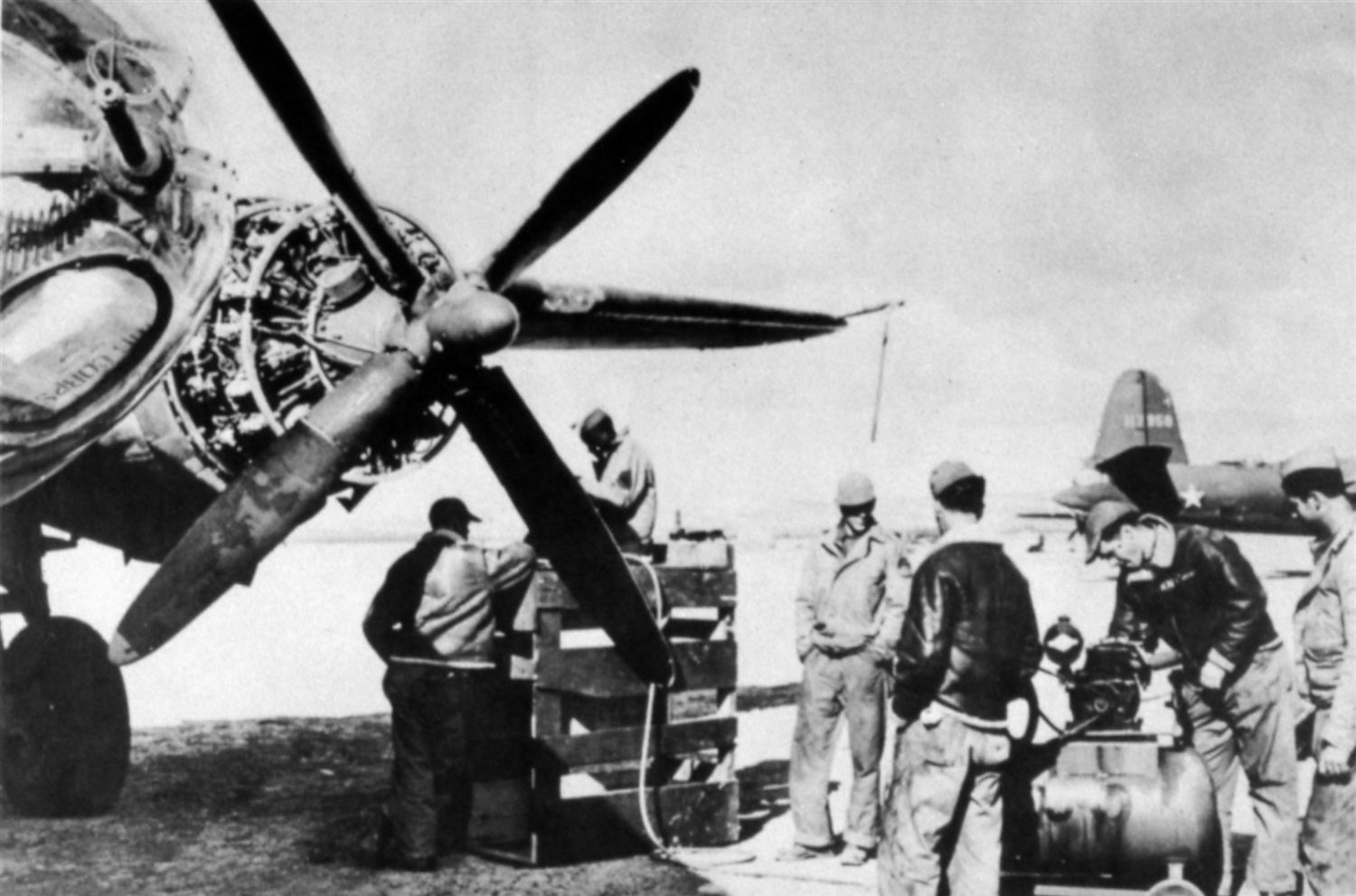
Mechanics were part of the recovery story. Propellers, tires, hydraulics, fuel systems, engines, and repaired battle damage all affected whether the aircraft could be trusted.
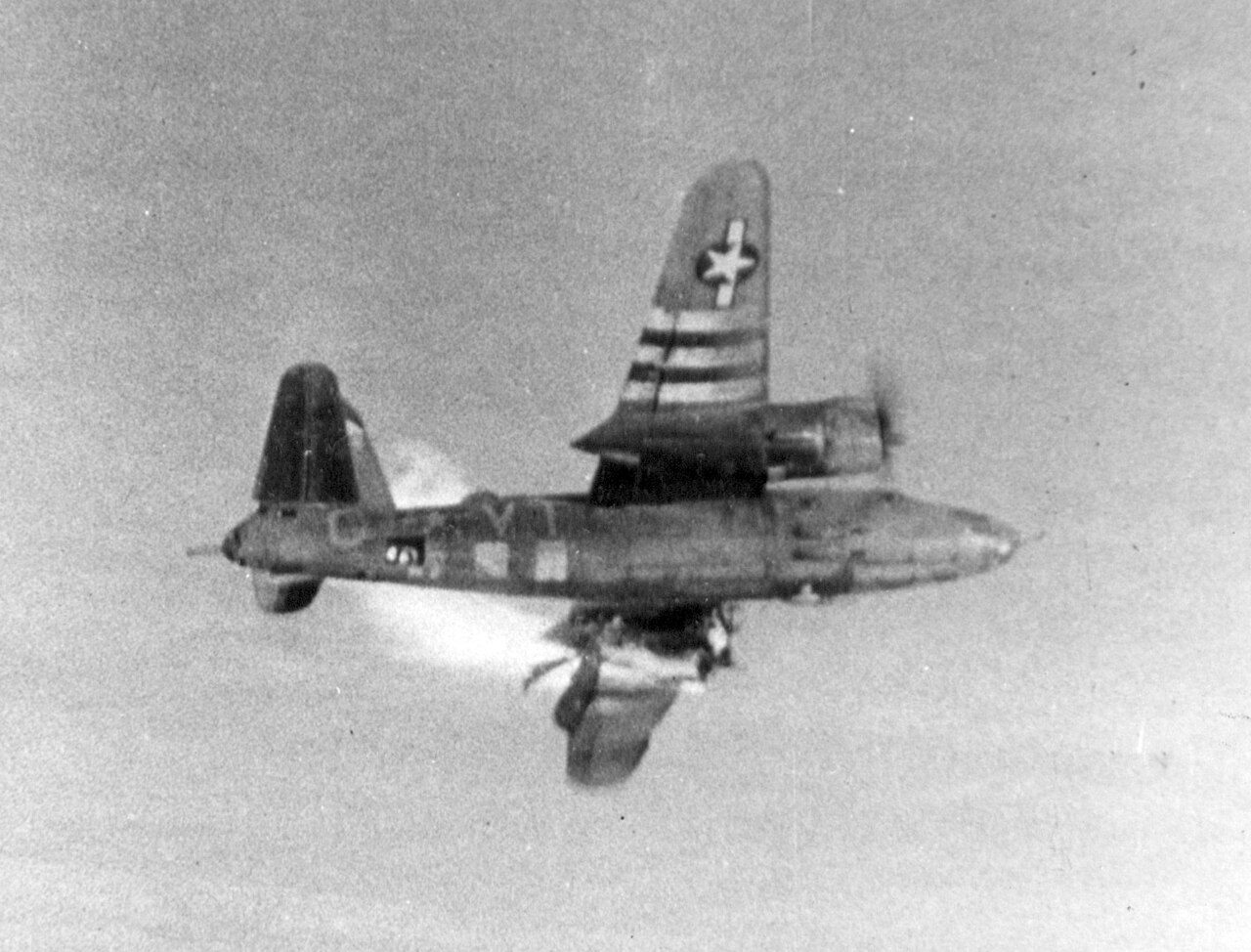
320th Bomb Group personnel servicing a Pratt & Whitney R-2800 engine on a B-26B Marauder in North Africa, 1942-1943. This is aircraft and maintenance context, not a Bob Cary-specific image. Image: Wikimedia Commons / NARA, U.S. federal government public domain source.Combat-risk context: a 323rd Bomb Group B-26 hit by flak over Eller, Germany, on 23 December 1944. This image shows the kind of hazard B-26 crews faced over Germany, but it is not Bob Cary's aircraft or unit. Image: Wikimedia Commons / USAAF, public domain.
Representative Specifications
Figures varied by model and field configuration. These are representative B-26G / late-war Marauder figures from the National Museum of the U.S. Air Force and 320th Bomb Group aircraft summary.
EnginesTwo Pratt & Whitney R-2800 radial engines, about 2,000 hp eachMaximum speedAbout 285 mphCruising speedAbout 190 mphRangeAbout 1,100 milesCeilingAbout 19,800 feetWingspan71 feetLengthAbout 58 feet 6 inches on the B-26GLoaded weightAbout 37,000 poundsArmamentEleven .50-caliber machine guns and up to about 4,000 pounds of bombsCrewCommonly seven in 320th combat summaries
What It Was Built To Do
Bridge and Rail Attacks
Many of Cary's documented missions were aimed at railroad bridges or marshalling yards. The B-26's speed and medium-bomber payload made it useful for repeated interdiction attacks against transport routes feeding the German front.
Ammunition and Supply Targets
Later Cary-linked missions include ammunition dumps and factories. These targets fit the 320th's final-campaign role: deny supplies, disrupt movement, and help Allied ground forces push into Germany.
Formation Discipline
B-26 missions relied on formation flying, target identification, and coordinated bomb runs. The 25 December 1944 Singen/Thayngen mission shows why that mattered: records say part of the formation hit the intended German target and part mistakenly bombed neutral Swiss territory.
Norden Bomb Run
The transcript describes the target run as a choreographed sequence: initial point, aiming point, bombardier corrections, straight-and-level exposure, bombs away, and immediate breakaway. The aircraft had to become a stable bombing platform at the exact moment every instinct wanted evasive motion.
Damage Survival
Crew accounts in the transcript emphasize how much punishment the B-26 could absorb: flak holes, damaged wings, engine trouble, belly landings, and aircraft that were wrecked after bringing crews home.
Operational Adaptation
The Marauder's final effectiveness came from matching tactics to design. Medium-altitude formation bombing, disciplined crews, and coordinated bombing made the aircraft much more useful than the early low-level experiments.
A first-person composite story that uses transcript-grounded B-26 crew details to make a target run easier to imagine without inventing Bob Cary's personal thoughts.
Used as a secondary context source for the aircraft's urgent development, early training crisis, Doolittle recovery arc, medium-altitude tactics, Norden bomb-run procedure, crew experience, and reputation shift.