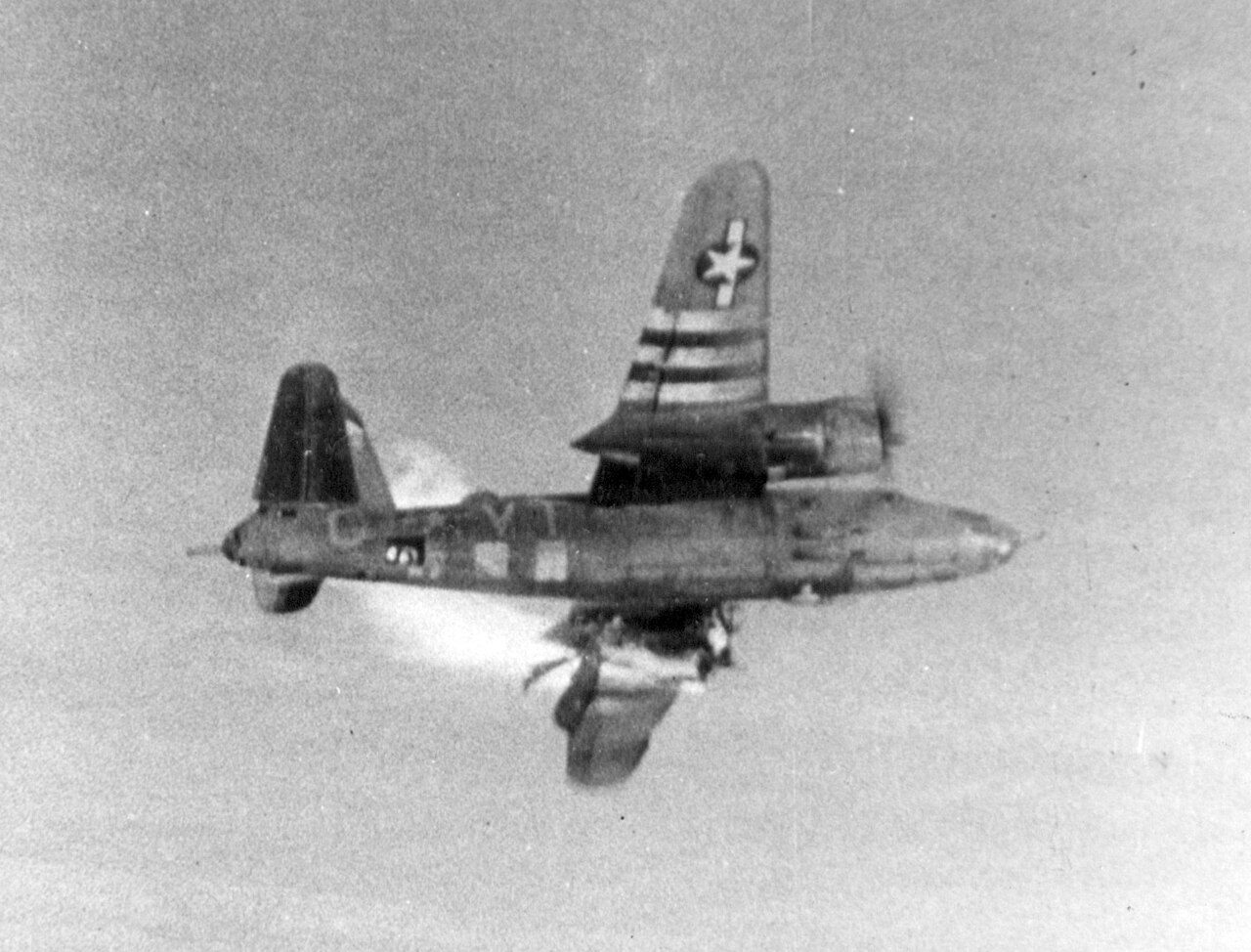
I learned about the B-26 before I learned to love it.
The first lesson was that it had a reputation. Every airplane on a wartime field had stories attached to it, but the Marauder's stories seemed to arrive before the engines started. Men talked about Tampa Bay, about landing speeds, about pilots who brought it in too slow and did not get a second chance. They used the nicknames half as jokes and half as warnings.
The airplane itself did not look like a joke. It looked fast sitting still. The nose was glass. The landing gear was modern. The engines looked large enough to pull a town off its foundations. Guns pointed from places where a man expected windows. Everything about it said that the old training airplanes were behind us.
On takeoff, there was no room for poetry. You checked what you were told to check. You listened for the engines to come up together. You felt the runway shaking under the wheels and watched the airspeed climb like it meant your life, because it did. If anything went wrong early, there was a moment when the right answer might be to chop the throttles and take what runway remained.
Once the Marauder flew, fear changed shape. It stopped being a single thing and became work.
Formation was the first work. The B-26 did not go to war alone. It flew as part of a group, and the group only protected itself if every airplane held its place. Too far out and the guns could not cover each other. Too close and a gust, a correction, or a nervous hand could turn one airplane into two emergencies. In rough air, holding position felt like trying to write your name while someone shook the table.
The briefing had given us the target, the route, the initial point, and the aiming point. On the map, it had all looked clean. In the airplane, nothing was clean. There was engine noise, interphone traffic, cold, glare, vibration, and the steady knowledge that the target was defended by men whose job was to make sure we did not get there.
The bombardier was the calmest man in the airplane because he had to be. As we approached the initial point, the world narrowed to procedure. The formation turned. The aiming point came ahead. The Norden bombsight became part of the airplane's nervous system. The bombardier began feeding corrections: left, right, steady, hold it.
That was the hardest part to explain later. On the bomb run, survival told you to move. Training told you not to. Flak made black dirty blossoms ahead and around us. Each burst looked like it had been placed personally. The airplane wanted to live. Every man inside it wanted to live. But the bombsight needed a steady platform, and the formation needed discipline, so we held the run.
Time changed there. A few minutes became longer than a morning. The pilot's job was to keep the airplane where it had to be. The bombardier's job was to solve the last seconds of math. The gunners watched for fighters. Men who could not change anything kept still because stillness was part of the work.
Then came the call.
Bombs away.
The airplane lifted, just a little, as the weight left it. Hands went back to the controls with the urgency everyone had been holding in. The formation began the breakaway. Straight-and-level obedience ended, and the Marauder became a machine for getting out.
There was no clean border between target and escape. Flak followed. Fighters might come in as the formation re-formed. A damaged airplane could drop behind, and every man knew what that meant. Stay with the group and live by massed guns. Fall out alone and hope the enemy was looking somewhere else.
The Marauder could take punishment. That was the thing men learned after they stopped hating it. Holes in the skin. Damage in the wing. Engines that should not have kept turning. Belly landings that destroyed the airplane but saved the crew. The B-26 was demanding, but it was not delicate.
Coming home, the noise felt different. The engines still worked. The formation still existed. The target was behind us. Men started to talk in ordinary voices again, as if ordinary voices could persuade the body that danger had passed.
Landing was never casual. The Marauder came home fast and heavy, even when the bombs were gone. You did not float it down like a trainer. You flew it all the way to the runway. Too slow was its own danger. Too high in the flare meant a hard arrival. The airplane asked for precision when a tired man had the least to spare.
When the wheels held and the engines wound down, the jokes came back first. They always did. A man could laugh at flak after he had landed. He could laugh at the airplane, the mission, the briefing, the rations, the weather, and himself. The laughter did not mean it had been easy. It meant the day had not become a report no one wanted to read.
That is how the B-26 changed in a man's mind. At first it was the airplane everyone warned you about. Then it became the machine you fought. Finally, if it brought you back enough times, it became something stranger: not safe, never safe, but trusted.
The old line was true. Either you flew it, or it flew you.
On the days we got home, we had flown it.